
Four filters between a search result and a shelf
Four filters, one zoom note per pick, prices with dates: how a 1688 listing earns a place on these short shelves.
What the ZentBuy Spreadsheet Loupe is, and what it is not
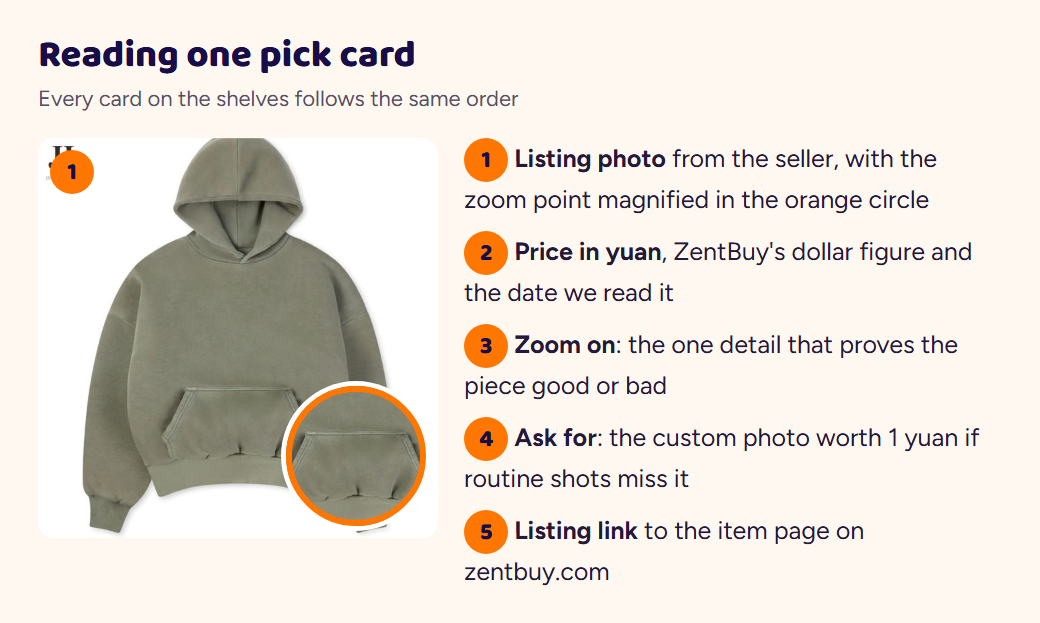
What is a ZentBuy Spreadsheet? In this trade the word means a product catalog: shelves of items, each with a photo, a price and a link you can order from through an agent. It is not a table you download. This one is deliberately short. Where larger catalogs list hundreds of items per category, we put three on each shelf and spend the space on the one detail you should check once ZentBuy's warehouse photographs your order.
The catalog is written for people buying through ZentBuy, so every pick is a listing that ZentBuy's own search returns and every pick link opens the item page on zentbuy.com, where it can go straight into a cart. Category links and the search box lead to much larger product listings when you want breadth instead of a shortlist.
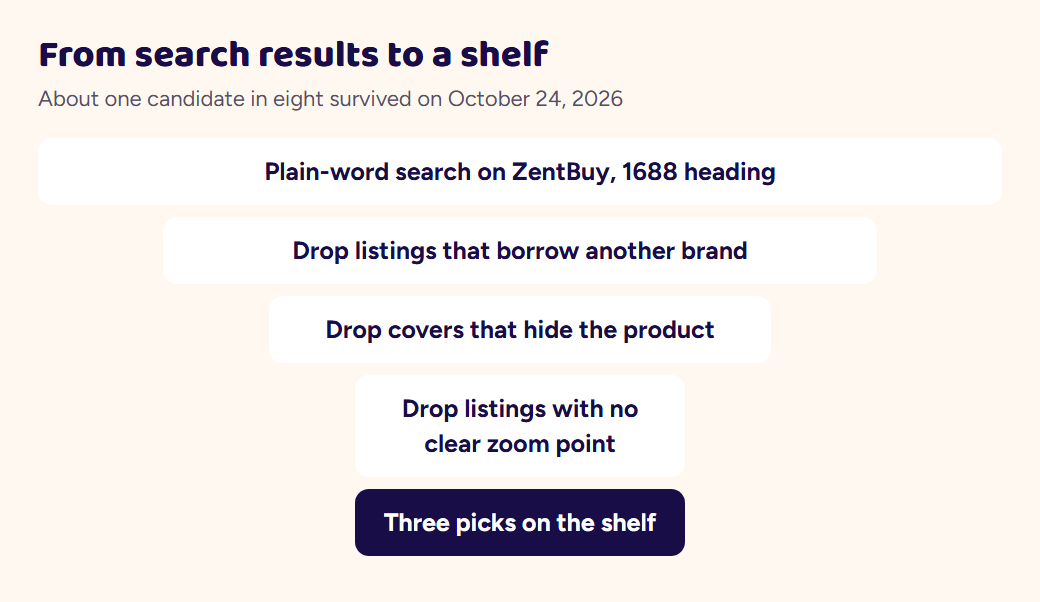
Four filters before a listing reaches a shelf
- It comes back from ZentBuy's 1688 search. We search plain words such as canvas tote bag or blank baseball cap, so every pick is something the agent can buy without a pasted link.
- It borrows no one else's brand. We drop any listing whose title, photos or options lean on another company's name, logo or signature design. A factory's own small label is fine and is mentioned on the card when visible.
- Its photo shows the actual product. We open the cover image of every candidate. Listings whose first photo is a size chart, a crowd of unrelated items or a stock lifestyle shot that hides the piece are skipped.
- We can name a zoom point. If we cannot say which detail would prove the piece good or bad, the listing does not get a card.
On October 24 that left about one usable listing in eight from our searches. The sneaker search was the worst: most results borrowed a well-known shoe's name in the title.
Why pair a ZentBuy Spreadsheet shortlist with a photo plan?
Discovery tools help find related listings and existing QC evidence. The Loupe's smaller catalog asks a narrower question: what visible detail would change your mind about this particular pick? Naming that detail before purchase gives the eventual warehouse review a purpose. It also keeps a popular listing or a large QC count from becoming a substitute for examining the right option.
A tote-bag comparison from search to warehouse
Compare two plain totes with similar cover photos. Record the width, depth, fabric option, number of pockets and handle construction from each seller's menu. If one price is for a smaller size, compare equal sizes before deciding it is cheaper. Then choose one inspection question, such as whether the handle stitching is visibly complete on both sides.
The card's orange zoom uses the seller's image to show where to look. It is not a photo of a delivered item. At ZentBuy's warehouse, use your own order's QC images; if the attachment is hidden or too small to judge, ask for a focused view of that join. The planner can turn the category and requested count into a clear photo request using the dated CNY 1 rule. Do not pay for another identical distant image when the missing evidence is a close-up.
Keep QC research attached to the same listing
When comparing external QC, match the marketplace ID, seller, variation and date where those details are available. Similar photos can belong to another listing or batch. A previous buyer's images can suggest what to inspect, but cannot establish that your item will match them. The original URL and the saved option are more useful than a cropped screenshot without context.
After photo review, the delivered-cost question still matters: seller delivery, payment conversion, services and international freight can exceed a small difference between two item prices. The shortlist saves search time and makes inspection more focused; it does not guarantee quality, stock or a cheaper final order.
Prices with dates, links that get checked
Every price on a card is the 1688 price that ZentBuy's search returned on the date shown, with the dollar figure ZentBuy displayed beside it. Prices on 1688 change often, and the item page shows the price for the option you choose, which can be higher than the lowest one. Dead links are the main way a catalog rots, so pick links are opened again whenever the catalog is rebuilt, and a listing that has vanished or changed into something else comes off its shelf.
This is also how we would suggest judging any spreadsheet site, this one included: check whether prices carry dates, open a few links at random, and see whether the site admits where official pages disagree.
Who pays for these pages
Category links and the search box on this site carry referral tracking, and the product listings they lead to may pay us when you buy. We hold no ZentBuy invitation code, so pick links and the registration link earn nothing from ZentBuy. No company has paid for a pick or reviewed these pages before publication.